incident tape
siftline turns incident noise into reviewable timelines
Share logs, alerts, deploy notes, and Slack context. siftline drafts the sequence your team can review.
Bring one recent incident bundle.
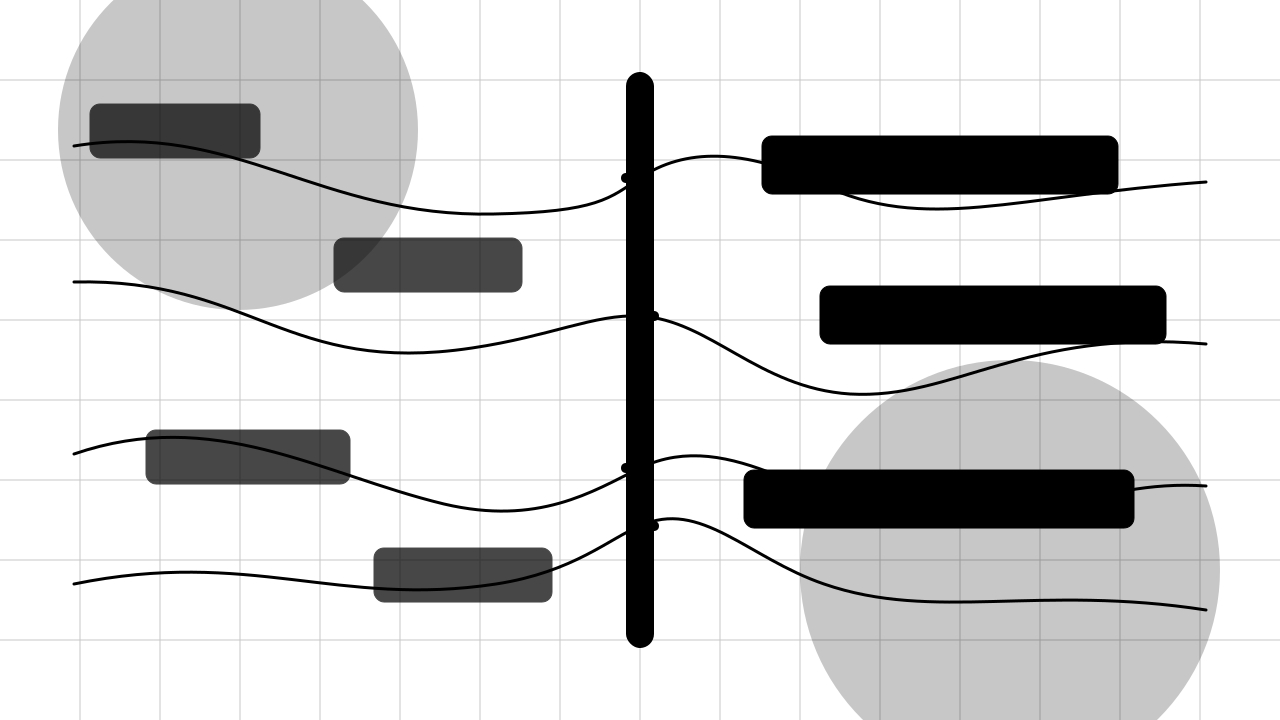
raw tape
reviewable timeline
Checkout errors rise after deploy
Datadog
Release 84d31 routes payment calls through a new worker
Deploy
Slack confirms retries are visible only for EU tenants
Slack
Rollback starts and error rate drops within two minutes
CloudWatch
Sits on top of the tools already in the room
CloudWatch, Datadog, deploy notes, alert payloads, and Slack context feed one reviewable tape.
CloudWatch
errors + latency
Datadog
alerts + traces
Deploy notes
release markers
Slack thread
operator context
Alert payload
trigger details
Log extract
raw evidence
A draft timeline engineers can edit quickly
Dense product typography, timestamped rows, source-link chips, confidence marks, and a visible edit path.
From one noisy bundle to a Slack-ready summary
The handoff stays calm: timeline on one side, shared Slack summary on the other, connected by source evidence.
Groups the noisy parts
Related logs, alerts, deploy markers, and Slack messages become one incident thread.
Writes the first pass
A timestamped plain-English timeline keeps source links beside every claim.
Keeps review explicit
Confidence marks and edit points show where an engineer should check the draft.
Posts where teams coordinate
The useful summary lands in Slack without replacing the incident process.
Useful drafts, not unsupported claims
Not autonomous root-cause analysis.
Not a PagerDuty, incident.io, or FireHydrant replacement.
Every claim points back to evidence.
Review-required moments are marked before sharing.
Review loop included
Validation targets, not trophy numbers
01
Under 20 min
Pilot target for prep
02
10 edits
Accuracy bar
03
5 bundles
First 30 days
04
1-10/mo
Best-fit volume
Waitlist first. Paid pilot only after the artifact is useful.
Design partners bring one real incident bundle. Paid pilots start at $500+/month after drafts are accurate enough to use.
Artifact review before pricing
Prep target under 20 minutes
No autonomous response claim
Objections before sharing incident data
Does siftline replace PagerDuty, incident.io, or FireHydrant?
No. It sits on top of existing incident and observability tools to draft the timeline artifact.
Does siftline find root cause automatically?
No. It organizes evidence into a reviewable sequence and points back to sources.
What do design partners provide?
One recent incident bundle: logs, alerts, deploy notes, and the Slack thread.
Who is the first fit?
AWS-first SaaS teams with 10-80 engineers and Slack-centered coordination.
How will siftline judge quality?
A draft should need 10 or fewer edits and reduce prep from 2+ hours to under 20 minutes.
Where does the CTA go?
A durable waitlist capture with analytics for fit and design-partner intent.
Bring one incident. Leave with a draft timeline.
siftline is looking for teams willing to test a real incident bundle, not a polished demo.